How agroBRIDGES Helps Farmers Build Short Food Supply Chains
agroBRIDGES empowers farmers through new business and marketing models based on Short Food Supply Chains (SFSC).
The novelty of agroBRIDGES is based on its integrated methodology. The project will establish multi-actor platforms in 12 targeted European regions that, together with the agroBRIDGES Toolbox, will help producers choose more sustainable business models.
The goal is to foster demand-driven innovation through a combination of decision support, and other digital tools, including communication materials, training programmes and events. All will be accessible in one place, the agroBRIDGES Toolbox, available for all stakeholders.

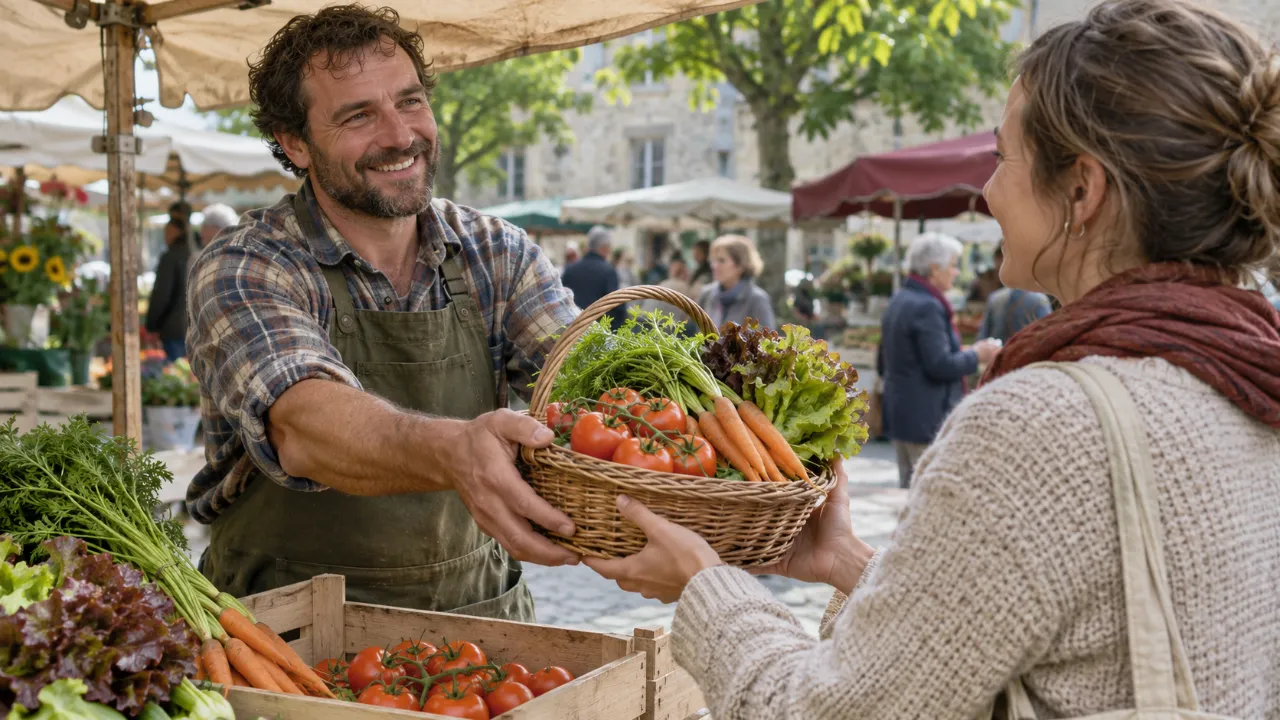
Facts & Figures
- PARTNERSHIP. More than 400 farmers and agri-food stakeholders involved in 24 online and off-line regional events for building SFSCs.
- SUSTAINABILITY. Developing new business and marketing models for sustainable SFSCs.
- TRAINING. 2 training programmes for farmers and 1 train-the trainer event, resulting in 150 actors trained on how to set up SFSCs.
- REBALANCING FOOD CHAINS. Increasing farm income through the participation of farmers in direct sales to consumers.
- SUPPORT RESOURCES. 12 regional co-creation workshops and the agroBRIDGES toolbox available in 12 languages.
- KNOWLEDGE. 36 EIP Practice Abstracts produced using experiences from the project
Our Concept
agroBRIDGES was born from the need to stimulate the adoption of Short Food Supply Chains (SFSCs) in the European Union. SFSCs introduces key economic, social and environmental benefits for sustainable development, like:
- Rebalancing the market position of farmers and increasing their income.
- Better connecting farmers with consumers and reducing intermediaries.
- Meeting the societal demand of providing safe and quality local food.
- Reducing the environmental impact of agriculture.
However, many farmers and consumers are still not tapping into their potential.
Our Metodology
STAGE 1: Collection of data, analysis & development of the multi-actor framework
Our first step is to develop a multi-actor framework by building Multi-actor platforms (MAPs) in our focal regions and the Stakeholder Reference Group (SRG). MAPs will help us capture regional information and engage producers and consumers. The SRG will provide a forum to promote dialogue and collaborative learning between stakeholders at EU level. Once the framework is created, our second step is a combination of desk work, online surveys, face-to-face interviews and regional and pan-European workshops.. MAPs and SRG will be involved in project activites during the whole project duration.
STAGE 2: Development of a sustainability assessment model and multicriteria analysis framework for SFSCs
Based on the info gathered in the previous stage, we will build a sustainability assessment model for SFSC business models. The sustainability assessment model will be integrated in a multicriteria decision framework to serve as a decision support tool for producers. This framework will integrate all relevant decision aspects such as environmental, economic and social to support decision making. The sustainability assessment model and the multicriteria decision framework will be validated using real data from the focal regions of the project.
STAGE 3: agroBRIDGES Toolbox development
The Toolbox will connect producers and consumers, while also promoting a multi-actor dialogue towards the improvement of existing SFSCs and the establishment of new, introducing benefits for producers and consumers. In order to achieve such goals, tools such as decision support and other digital tools will be developed and delivered along with communication materials, trainings and workshops.
STAGE 4: agroBRIDGES Toolbox validation
Once the agroBRIDGES Toolbox has been developed, it will be time for us to test its suitability with the active participation of all the stakeholders involved. To do that, the validation will be conducted following a PLAN-DO-CHECK-ACT approach. This approach will ensure the involvement of actors from all MAPs, leading to more than 400 people being engaged and benefiting from the use of the Toolbox.
STAGE 5. Roll out, replication and training
Once the validated version of the Toolbox is ready, we will roll it out across Europe. In parallel, we will launch a series of capacity building actions in the form of trainings and knowledge exchange events. The main activities of the project in this last stage include the publication of a user guide for the Toolbox, the organization of 12 knowledge transfer days, the delivery of a train-the-trainer programme and a pan-European peer learning event.
Our Results
agroBRIDGES aims to contribute, in the medium and long-term, to an increase of 5-8% EU farms involved in direct sales to consumers thanks to the support provided by the project toolbox. The support tools will have a large and positive impact in boosting connections between producers and consumers.
The replication of project outputs is expected to be carried out during and after the project completion, enhancing the project impact in the long term, setting the basis for an improved producers’ position in EU markets. The main target is to achieve a full European roll-out of the toolbox as well as to completely involve all agri-food community actors.
The multi-actor framework means that between 140–260 stakeholders (10-20 actors per regional MAP and 20 SRG members) will be directly involved in knowledge exchange, cocreation and co-development of project outputs. Moreover, since 12 regional workshops and a pan-European event are planned, around 150 (as avg.) participants in the replication and EU roll-out phase are expected. In total, ca. 400 stakeholders from the agri-food sector will be involved in the project during its implementation.
- DIRECT SALES - Increased number of farms involved in direct sales to consumers
- COOPERATION - More than 400 agri-food stakeholders involved in the project
- TRAINNING - Nearly 150 farmers and stakeholders trained on topics related to SFSCs
- FARMERS INCOME - Enhanced farmers income by increasing their profit
agroBRIDGES empowers farmers through new business and marketing models based on Short Food Supply Chains (SFSC)
The novelty of agroBRIDGES is based on its integrated methodology. The project will establish multi-actor platforms in 12 targeted European regions that, together with the agroBRIDGES Toolbox, will help producers choose more sustainable business models.
The goal is to foster demand-driven innovation through a combination of support tools such as communication materials, training programmes, events, decision support, and other digital tools. All will be packed in one place, the agroBRIDGES Toolbox, accessible for all kinds of public.